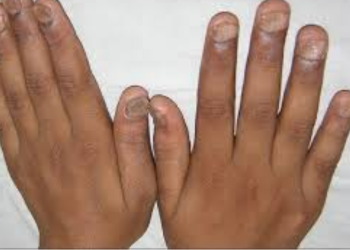
KOILONYCHIA (Spoon Nails)
Koilonychia
is indented nails. Instead of growing straight, your nails look concave, like
spoons. In many people, koilonychia is a sign of iron deficiency. Usually, you
can get rid of spoon nails by treating the underlying cause. Spoon nails in
babies are fairly common. One study found that nearly 1 in 3 infants have spoon
nails. Usually, babies’ nails flatten as they grow.
Homoeopathy treats the underlying
causes of koilonychia. Also, homeopathy have constitutional medicines which can
improve iron absorption.
Koilonychia
refers to soft nails that have a spoon-shaped dent in them. Often these “spoon
nails” form gradually. In many people, the first sign of koilonychia is
flattened nails. Then, eventually, an indentation forms. The indentation is
deep enough to hold a drop of water on your nail bed.
Usually,
koilonychia occurs because of an underlying medical condition. more likely to
have spoon nails in nutritional deficiencies like iron or vitamin B
deficiencies.
The name
“koilonychia” comes from the Greek word koilos, which means hollow. Nychia
refers to nail conditions.
Is koilonychia a fungal infection?
No.
Koilonychia is a symptom, not an infection. But sometimes people with
fungal nail infections can get spoon nails.Usually, if you have a
fungal nail infection, you also have inflammation or irritation along with spoon nails.
Possible Causes
Most
often, spoon nails are a sign of iron deficiency because the body
Can’t absorb iron.
Don’t consume enough iron.
Have celiac disease, cancer or
bleeding in intestinal tract.
Lose iron with excessive menstruation.
In some
cases, koilonychia is hereditary. It can also result from an injury to the nail
bed, such as thumb-sucking in babies and toddlers or too-tight shoes in people
of all ages. Sometimes, spoon nails are genetic. And people living at very high
altitudes appear to have a higher likelihood of spoon nails
Sometimes,
koilonychia points to another medical condition. Spoon nails can be a symptom
of:
Diabetes mellitus.
Heart
disease.
Hemochromatosis (iron overload).
Lichen planus.
Lupus (systemic lupus
erythematosus).
Nail
patella syndrome, a genetic disorder affecting your nails and bones.
Underactive
thyroid (hypothyroidism).
Raynaud’s phenomenon.
RISK FACTORS
You’re
more likely to have koilonychia if you eat a vegetarian diet.which may raise your risk of
being low in iron.
Iron deficiency.
Low blood flow to your fingers or toes.
Lupus (systemic lupus erythematosus)
Malnutrition or an eating disorder.
Care and Treatment
Healthcare
providers treat the underlying cause of koilonychia. If you have an iron
deficiency, changing your diet maybe eat
more
Beans and lentils.
Dark chocolate.
Fortified foods, such as bread or breakfast cereal.
Iron-rich fruit, such as dates, figs, prunes and
raisins.
Leafy greens, such as spinach or kale.
Meat and seafood rich in iron.
Nuts and seeds.
Tofu.
PREVENTION
Often, treating the underlying cause of
koilonychia will make your nails grow properly. But it can take a long time. It
may take six to 18 months for koilonychia to go away.
There’s
no guaranteed way to prevent spoon nails. You can lower your risk of spoon
nails by eating a balanced diet.
You can
also lower your risk of nail problems by taking care of your nails like
Clean your nails with a soft brush.
Keep your nails moisturized with hand cream.
Trim your toenails straight across to prevent
ingrown nails.
Use rubber gloves when cleaning or using chemical
products.
Wear properly fitting footwear that doesn’t cramp
your feet.
Silicea
Antimonium crudum