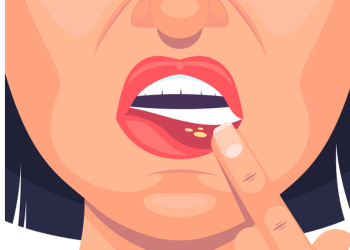
A mouth ulcer is a sore that appears anywhere inside your mouth.These sores are usually red, yellow or white, and you might have one or several.
COMMON AREAS OF MOUTH ULCER
Gums.
Tongue.
Roof of mouth
(palate).
Inner cheeks.
Inner lips.
These sores are often painful
and can make eating, drinking and speaking uncomfortable.
Mouth ulcers can be alarming.
However, they’re not a sexually transmitted infection(STI) and you can’t get or spread them from kissing or sharing food and drinks. Aside
from any pain and discomfort, mouth ulcers are usually harmless and go away on
their own in a week or two. But some types of mouth sores could point to
underlying health conditions like viruses,autoimmune
diseases or gastrointestinal
issues.
Types
of mouth ulcers
There are many different types
of mouth sores and lesions, including:
Canker
sores (aphthous ulcers)These are the most common type of mouth ulcers. Healthcare providers aren’t
exactly sure what causes them or why some people get them more than others do.
Causes include minor trauma (like biting your cheek), acidic foods and even
stress. Canker sores are usually white or yellow with red around the edges.
Oral
lichen planusThis condition can cause
itchy rashes and lacelike, white sores inside your mouth. Oral lichen planus is
an immune system response and most commonly affects females age
50 or older.
LeukoplakiaThis condition causes white or gray patches inside your mouth. It develops
because of excess cell growth. Chronic irritation from things like smoking or
chewing tobacco can cause it. But sometimes it happens for no apparent reason.
Leukoplakia lesions usually aren’t cancerous.
ErythroplakiaErythroplakia is another symptom of smoking or chewing tobacco.People with erythroplakia have red patches that commonly
appear behind their lower front teeth or under their tongue. Unlike leukoplakia
lesions, erythroplakia patches are usually precancerous or cancerous.
Oral
thrushAn overgrowth of yeast called Candida
albicans causes this fungal infection inside your mouth. It commonly
happens after antibiotic treatment or when your immune system isn’t as strong
as it usually is. Oral thrush causes red and creamy white mouth sores and
patches.
Mouth
cancerOral cancer lesions can show up as red or white
mouth sores or ulcers. These sores won’t heal on their own. This kind of mouth ulcers may not be gone after three weeks
Symptoms
and Causes
What
are the symptoms of a mouth ulcer?
Mouth ulcers are usually easy
to spot. They appear as sores on your gums, tongue, inner cheeks, inner lips or
roof of your mouth.
Mouth sores are typically:
Red around the
edges.
White, yellow or
gray in the center.
You may only develop one
ulcer, or there might be more. Other symptoms could include:
Swelling around
the ulcers.
Increased soreness
when brushing your teeth.
Pain that worsens
when eating spicy, salty or sour foods.
CAUSES
Minor tissue injury from dental work, such as having a cavity filled.
Accidentally biting your cheek
or tongue.
An allergic reaction to
certain bacteria.
Wearing braces or retainers.
Using harsh or abrasive
toothpaste.
Eating lots of acidic foods,
such as oranges, pineapples and strawberries.
Hormonal
changes during your period.
Lack of sleep.
Vitamin deficiencies.
Viral, bacterial or fungal
infections.
Crohn’s
disease.
Celiac
disease.
Reactive
arthritis.
Lupus.
Behçet’s
disease.
Diagnosis
and Tests
A healthcare provider can diagnose a mouth ulcer with a visual examination. If you have a severe breakout, or if they suspect a specific health condition, they may order blood tests.
Management
and Treatment
While most mouth sores heal on
their own, your provider may prescribe medications to help ease discomfort.
Common mouth ulcer treatments include,
There are also things you can
do at home to relieve mouth sore symptoms:
Drink plenty of water.
Practice good oral
hygiene to keep your mouthas clean as possible.
Rinse your mouth with warm
saltwater a few times each day.
Make a mixture of equal parts
hydrogen peroxide and water and rinse your mouth twice a day.
Avoid hot and spicy foods
until the ulcer heals.
PREVENTION
Brush your teeth twice daily
and floss once daily for optimal oral health.
Use a soft-bristled toothbrush
to avoid tissue irritation.
Eat a healthy diet rich in
fresh fruits and vegetables.
Visit your dentist regularly
for checkups and
cleanings.
Anyone can get mouth ulcers.
But you should call your healthcare provider if you have:
Mouth sores that
last for three weeks or longer.
New sores that
appear before the old ones heal.
Mouth ulcers that
affect the outer part of your lips.
Pain that doesn’t
improve with medication.
Unusually large
mouth ulcers.
Mouth sores that
are painless.
HOMEOPATHIC
MEDICINES
NUX VOMICA
MERC SOL
BORAXH