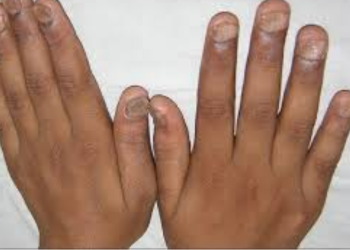
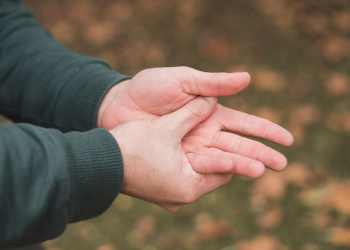
Trigger finger makes a finger get stuck in a bent position. It
may straighten suddenly with a snap. The fingers most often affected are the
ring finger and the thumb, but the condition can affect any finger.
Trigger
finger happens when the tendon that controls that finger can't glide smoothly
in the sheath that surrounds it. This may occur if part of the tendon sheath
becomes swollen or if a small lump forms on the tendon.
SYMPTOMS
Finger stiffness, particularly in the morning.
A popping or clicking sensation as the finger
moves.
Tenderness or a bump in the palm at the base of the
affected finger.
Finger catching or locking in a bent position,
which suddenly pops straight.
Finger locked in a bent position.
CAUSES
Trigger finger can
affect any finger, including the thumb. More than one finger may be affected at
a time, and both hands might be involved. Triggering is usually worse in the
morning.
Tendons are tough cords that attach muscle to bone. Each tendon
is surrounded by a protective sheath. Trigger finger occurs when the affected
finger's tendon sheath becomes irritated and swollen. This makes it harder for
the tendon to glide through the sheath.
In
most people, there's no explanation for why this irritation and swelling
begins.
The
constant back-and-forth irritation can cause a small lump of tissue to form on
the tendon. This lump is called a nodule. The nodule can make it even harder
for the tendon to glide smoothly.
Repeated gripping. Occupations
and hobbies that involve repetitive hand use and prolonged gripping may
increase the risk of trigger finger.Certain health
problems. People who have diabetes or rheumatoid arthritis are at higher
risk of developing trigger finger.Your sex. Trigger
finger is more common in women.
COMPLICATIONS
ARNICA MONTANA
RHUS TOXICODENDRON
RUTA GRAVEOLENS